Physical Address
304 North Cardinal St.
Dorchester Center, MA 02124
Physical Address
304 North Cardinal St.
Dorchester Center, MA 02124

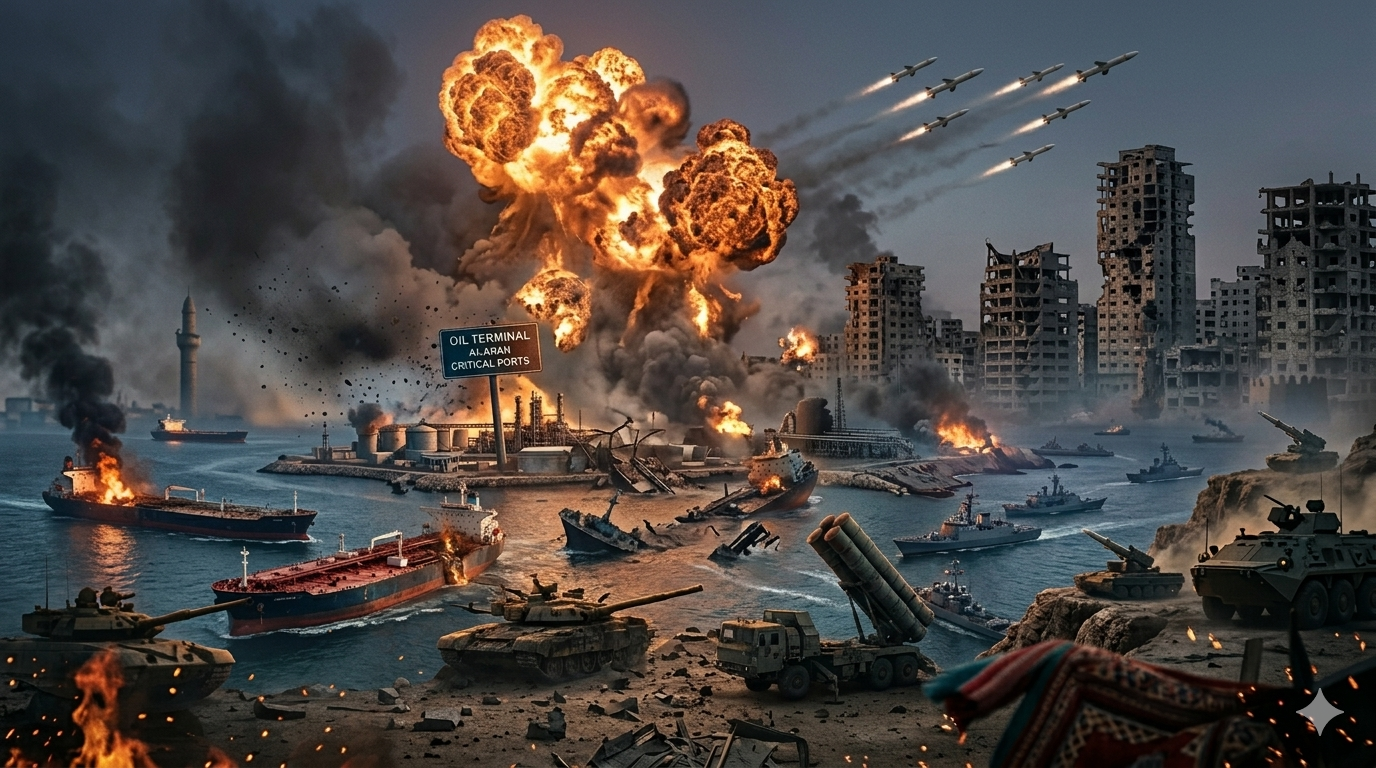
The Iran US war 2026 has become one of the most serious geopolitical crises shaping international politics today. Rising tensions between the United States, Iran, and Israel have created concerns about regional instability, global energy security, and the possibility of a broader Middle East conflict.
Governments, analysts, and citizens around the world are closely following the situation as new developments continue to emerge. Questions such as are we at war, is Iran going to attack the United States, and how the conflict could affect global oil supply are now dominating global discussions.
Understanding the latest updates and global impact of the Iran US conflict is essential because this crisis could influence international diplomacy, global energy markets, and the future of Middle East security.
The Iran US war 2026 refers to the escalating military confrontation and geopolitical tensions involving Iran, the United States, and regional allies such as Israel. The conflict includes military strikes, missile attacks, strategic retaliation, and rising diplomatic tensions that could significantly affect global security and energy markets.
Although there has not been an official declaration of war between the two countries, ongoing military operations and retaliatory actions indicate a serious regional conflict.
Recent developments in the Iran US war 2026 show an increasing level of military activity across the Middle East. Strategic facilities, missile infrastructure, and military bases connected to Iran’s defense network have reportedly been targeted in coordinated strikes.
These operations have intensified the confrontation between the United States and Iran while also increasing the involvement of Israel in the conflict.
Iran has responded with missile and drone attacks targeting military installations and strategic infrastructure across the region. Such retaliatory actions have raised fears that the current war in Iran could expand into a larger regional crisis.
International organizations and global leaders continue to monitor the situation closely as new developments unfold.
To fully understand the Iran US war, it is important to examine the long history of tensions between the two countries.
Relations between the United States and Iran deteriorated significantly after the 1979 Iranian Revolution, which transformed Iran’s political system and ended its alliance with the United States.
Over the decades, disagreements over nuclear development, economic sanctions, and regional influence created ongoing diplomatic and political conflict. This long-standing rivalry has gradually evolved into a broader geopolitical struggle involving military tensions, cyber warfare, and proxy conflicts.
Recent developments in the Middle East have pushed these tensions toward what many analysts describe as a possible US Iran war.
Several major factors have contributed to the escalation of the Iran US war 2026.
One of the primary sources of tension between the United States and Iran has been concerns over Iran’s nuclear program and missile development.
Western governments have repeatedly expressed concerns about Iran’s ability to develop advanced weapons systems. These concerns have created ongoing diplomatic disputes and economic sanctions.
Another key factor behind the crisis is the geopolitical rivalry between Iran and Israel. The ongoing Israel Iran war dynamic has included cyber operations, military actions, and proxy conflicts across countries such as Syria, Lebanon, and Iraq.
Over time, these indirect confrontations have increased the risk of direct military engagement between Iran Israel forces.
The strong security relationship between the United States and Israel has also played a major role in shaping the current crisis.
When Israeli security concerns escalate, the United States often increases its involvement in regional security operations, which can intensify tensions with Iran.
Israel has long considered Iran one of its most significant security threats. Israeli officials frequently warn that Iran’s military expansion and nuclear ambitions could threaten regional stability.
Because of these concerns, Israel has conducted operations targeting Iranian military capabilities and strategic infrastructure.
These actions have contributed to the ongoing Israel Iran war dynamic and increased the risk of wider confrontation involving the United States.
As tensions escalated in 2026, Israel’s role became increasingly important in shaping the direction of the Iran US war.
One of the most strategically important aspects of the conflict is the Strait of Hormuz, a narrow waterway that connects the Persian Gulf to global shipping routes.
Approximately 20 percent of the world’s oil supply passes through this route every day, making it one of the most critical energy chokepoints in the world.
Any disruption in the Strait of Hormuz can have immediate consequences for global energy markets and international trade.
During periods of tension, Iran has occasionally warned that it could restrict shipping traffic through this passage. Even the possibility of such action can cause significant fluctuations in global oil prices and increase uncertainty in energy markets.
For this reason, the stability of the Strait of Hormuz remains a major concern during the Iran US war 2026.
The Iran US war 2026 has already begun to influence global economic conditions.
One of the most immediate effects has been increased volatility in oil markets. As tensions around the Strait of Hormuz rise, oil prices often increase due to fears of supply disruption.
Higher energy prices can affect transportation costs, manufacturing industries, and global supply chains.
Shipping companies have also begun adjusting routes to avoid potentially dangerous areas in the region. These changes increase logistical costs and may slow international trade.
If the conflict continues or expands, its economic consequences could affect multiple sectors of the global economy.
A question frequently asked around the world is are we at war.
While the United States and Iran have not formally declared war, the current situation involves active military operations, strategic strikes, and retaliatory actions between multiple actors in the region.
Because of these developments, many analysts describe the situation as an active US war scenario within the Middle East.
However, the conflict has not yet escalated into a full global war.
Another question often discussed in global media is is Iran going to attack the U.S.
Although Iran has targeted U.S. military assets and bases in the region, experts generally believe that a direct attack on the U.S. mainland remains unlikely.
Such an action would likely trigger a massive military response.
Instead, analysts suggest that Iran may continue using indirect strategies such as cyber operations, proxy forces, and regional missile activities to challenge U.S. influence without triggering a full-scale war.
Several possible outcomes could shape the future of the Iran US war 2026.
Diplomatic negotiations may reduce tensions and lead to a ceasefire agreement.
Military operations could continue at a limited level without expanding into a wider regional war.
The conflict could also escalate further, drawing additional countries into the confrontation.
Another possible outcome involves renewed negotiations over Iran’s nuclear program as part of broader efforts to stabilize the region.
For now, the international community is attempting to prevent the war with Iran 2026 from turning into a larger global crisis.
The Iran US war 2026 represents one of the most significant geopolitical challenges of the decade. Rising tensions between Iran, the United States, and Israel have created serious concerns about regional stability, global energy markets, and international security.
While the situation remains uncertain, diplomatic efforts and international cooperation could still help prevent further escalation.
As the crisis continues to evolve, governments and global institutions will play a crucial role in determining whether the conflict moves toward resolution or deeper confrontation.
There is ongoing military conflict involving Iran, the United States, and Israel in the Middle East. However, there has been no formal declaration of war.
The crisis escalated due to military strikes, retaliatory attacks, and long-standing tensions related to Iran’s nuclear program and regional influence.
Israel views Iran’s military capabilities as a major security threat, which has contributed to the escalation of tensions in the region.
The Strait of Hormuz is one of the most critical oil shipping routes in the world, with roughly 20 percent of global oil supply passing through it daily.
While the current conflict remains regional, escalation involving additional countries could increase the risk of a wider international crisis.